


Menu
Intuitive Eating During Pregnancy: Your Questions, Answered
Blog posts are provided for informational purposes only, and are not a substitute for individualized healthcare. In case of emergency, dial 9-1-1.
filed under:
So you’ve done the work. You’ve started to make peace with food, you’ve stopped labeling things “good” and “bad,” and for the first time in a while, eating feels… okay. And then you found out you’re pregnant, and suddenly your socials are full of “eating for two” hot takes and unsolicited bump commentary and you’re wondering: does any of this intuitive eating stuff still apply?
And it does, but we know it’s not always that simple — especially when morning sickness is making everything sound gross, your body is changing faster than you can keep up with, and you’ve got a history with food that makes everything feel that much…more.
Luckily, that’s what we’re here for — giving you the answers to the questions we hear most around intuitive eating during pregnancy, and we’re doing it without making you feel like you’re doing everything wrong:
Quick note before we get into it: intuitive eating is a wonderful framework, and it also exists in the real world — which means there’s nuance. If you’re managing a pregnancy-specific condition like gestational diabetes, hyperemesis gravidarum, or another medical concern, some of this guidance may need to be adapted with your care team. We’re speaking generally here, not to your specific chart. When in doubt, bring it to your provider.
Can You Start Intuitive Eating During Pregnancy?
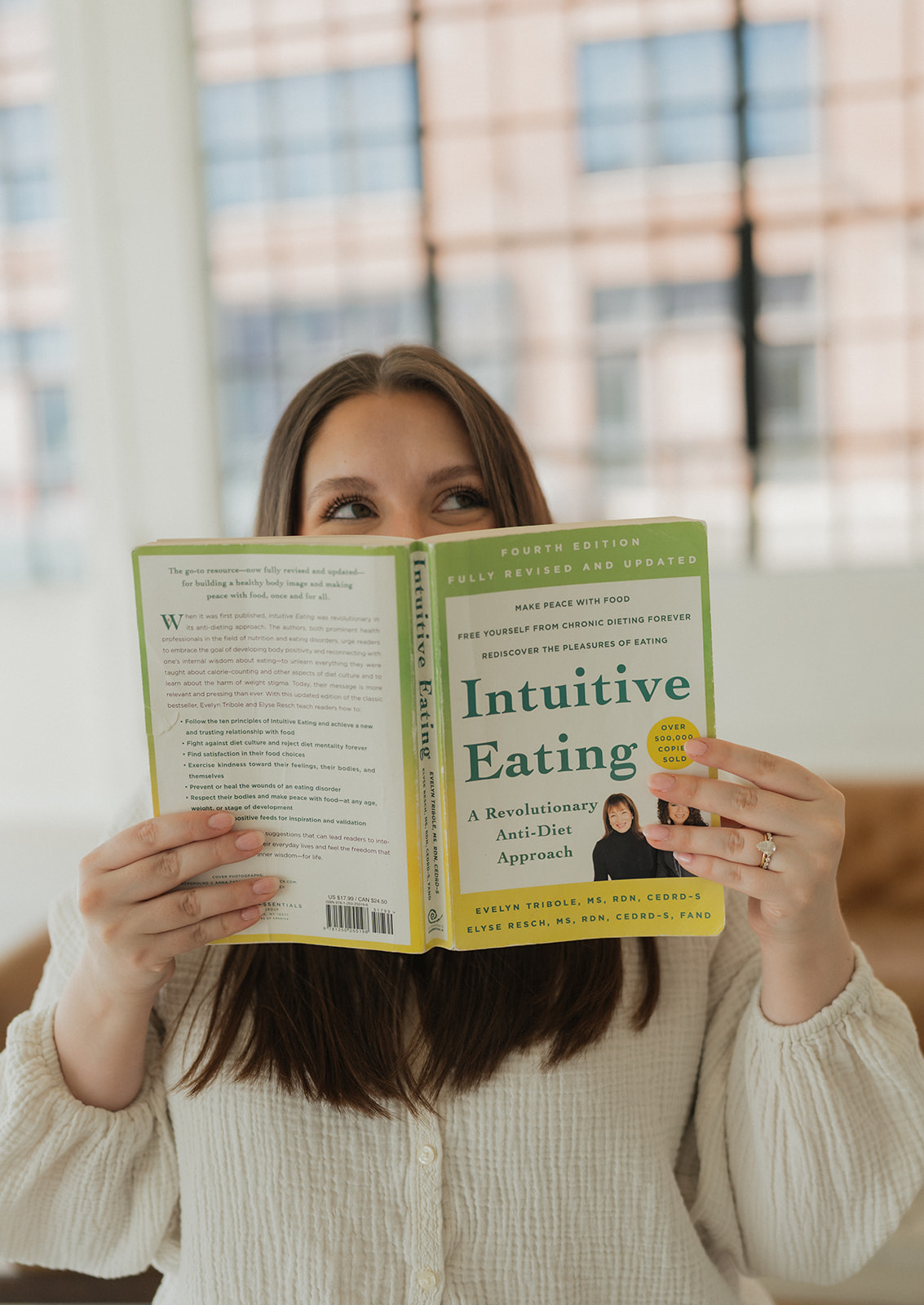
Yes — and if you were already practicing it, you don’t have to ditch it now. Intuitive eating isn’t a meal plan or a set of rules. It’s a framework (developed by dietitians Evelyn Tribole and Elyse Resch) built around 10 principles that help you reconnect with your body’s hunger and fullness cues, ditch the chronic dieting cycle, and stop treating food like a moral test you’re constantly failing.
Pregnancy is actually one of the most intuitive eating-aligned experiences your body will ever go through — your body is communicating with you constantly. Hunger, aversions, cravings, fatigue — you’re getting 3,001 signals about what your body wants, needs, and craves.
And, just as you would during regular intuitive eating, the goal is to listen, respond, and take care of yourself (and your growing baby).
That said: if you’re new to this and you also have a complicated history with food, starting intuitive eating during pregnancy is worth doing with support. Not because you can’t do it — but because working with a dietitian who actually gets the nuance of this intuitive eating + pregnancy (hi, that’s us) makes the world of a difference in your experience.
What Are the Benefits of Intuitive Eating During Pregnancy?
Diet culture would love for you to spend your entire pregnancy tracking, measuring, and worrying. Except research consistently links intuitive eating to better psychological wellbeing — including reduced anxiety and depression, both of which you could use less of during pregnancy.
A separate study published in 2017 even found intuitive eating scores were associated with healthier gestational weight outcomes compared to more traditional, restrictive approaches.
When it comes to benefits, intuitive eating during pregnancy creates:
- Less anxiety around food (which matters when you’re already navigating pregnancy)
- More body attunement, think noticing the shifts in your needs trimester to trimester
- A healthier relationship with your body’s changes
- Lower risk of disordered eating behaviors — during pregnancy and postpartum
- A foundation for how you’ll eventually talk to your kid about food and bodies
Okay, But How Does Intuitive Eating Actually Work During Pregnancy?
Intuitive eating is more than “just listen to your body” and while it’s great advice, it doesn’t really provide a true starting place — or reference point for support. Here’s what intuitive eating can look like during pregnancy:
Honor your hunger, even when it’s all over the place.
Pregnancy hunger doesn’t follow a schedule. Some days you’re starving by 9am. Other days (especially in the first trimester) eating feels like a full-time job you didn’t sign up for.
Intuitive eating asks you to respond to hunger cues rather than override them. During pregnancy, eating consistently throughout the day also helps stabilize blood sugar — which affects your energy, your mood, and your baby’s development. So when your body says “I need something,” it’s something worth listening to.
Make peace with your cravings.
Yes, your pregnancy cravings are going to be genuinely wild on occasion, but they can still be surprisingly intuitive. When you have a craving, it’s your body signaling there’s a need or a want for something.
Sometimes it’s something physical, like a specific vitamin — and sometimes it’s seeking comfort. Sometimes it’s just a thing that’s happening and that’s fine. Approach your cravings with curiosity (and not like your body is crazy).
Ditch the idea of a “perfect plate.”
Intuitive eating is NOT about eating perfectly — there is no “perfect plate.” The goal is to consistently nourish your body, or embrace “gentle nutrition,” one of the 10 principles of intuitive eating (when making food choices honors both how the food tastes AND how they make you feel).
During pregnancy, this might look like making sure you’re getting enough folate, staying hydrated, eating enough protein, and including a variety of foods when your body is cooperating.
Give yourself grace around fullness.
Fullness cues are unreliable at best and all over the place at worst during pregnancy. You might find that smaller, more frequent meals work better instead of large portions. It might even look like eating at different times of the day than usual.
What About Morning Sickness and Other Pregnancy Symptoms?
Morning sickness (which, as we all know, is not limited to mornings) can make “listening to your body” feel impossible when your body seems to be communicating exclusively through nausea.
When your symptoms are running the show, it’s hard to feel like you’re actually eating intuitively — but again, the goal is to eat without judgement. And if that means crackers and ginger ale, it means crackers and ginger ale.
The same applies to food aversions, increased heartburn, acid reflux… eat what you can! But, if at any point you’re worried about getting enough nutrients, your low appetite is persistent, or you’re struggling with keeping your food down, talk to your doctor and/or dietitian.
What If I Have an Eating Disorder or Disordered Eating History?
Being pregnant can bring up a lot when you have an eating disorder or disordered eating history. Your body is changing — rapidly — and out of your control. You’re getting comments from people who mean well, but say the wrong thing.
All the “little” things about weight gain, how “big” or “small” you are, and “eating for two” can trigger old patterns before you even realize it’s happening. But here’s what we want you to know (honestly, what you need to know):
- Having an eating disorder history doesn’t mean you can’t practice intuitive eating during pregnancy — you just deserve a little more support doing it.
- Your OB or midwife may ask about your history. You can bring it up. You should bring it up. Your care team needs to know so they can best support you.
- Weight gain during pregnancy is necessary and it can be hard.
The most effective way through this is collaborative care — a therapist and a nutritionist, working together, both actually in your corner. That’s not a sales pitch, that’s just what the research shows, and it’s also how we operate at Grow with Gabi.
Not the uncomfortable-couch, tell-us-how-you-feel kind of care — the kind that actually accounts for your relationship with food and everything tangled up in it: anxiety, depression, OCD, trauma, pregnancy.
Eating for Two Shouldn’t Mean Stressing for Two
Intuitive eating during pregnancy (and intuitive eating at any point in life) is not about perfection — it’s about staying connected to your body even when symptoms are rough, kinda crazy, or when old stuff surfaces.
You’re allowed to nourish yourself in a way that works for you. You’re allowed to eat the crackers. You’re allowed to trust your hunger. And you’re allowed to ask for support when the food stuff feels too layered to navigate alone.
At Grow with Gabi, our team sees therapy clients in Texas, Colorado, and Florida, and nutrition clients in Texas, California, Colorado, and Virginia. Not sure if that’s you? Reach out anyway — we’ll figure it out together.

hey there!
If you're reading this blog, there are three things you should know:
01
Your story deserves to be told.
02
Your story deserves to be heard.
03
You deserve a say in your story.
The Grow With Gabi team specializes in therapy & nutrition care that meets you where you are and lets you set the pace. When you're ready (or ready enough), we're licensed to provide virtual care in several states across the US, and would be honored to be part of your story.
Explore
Get In Touch
© 2024-2026 Grow with gabi, PLLC | policies | website by hello & co creative
Grow With Gabi offers specialized therapy and nutrition counseling services for teens and adults in recovery from disordered eating. Services available in-office in Houston, TX, or virtually for residents of select states.
Services

